Crypto & Web3·May 19, 2026

21Shares says Hyperliquid ETF demand shows appetite for 24/7 trading

21Shares says strong early flows into its new Hyperliquid ETF reflect growing investor demand for around-the-clock access to crypto and traditional assets.

CoinDesk1 min readVerified
21Shares says Hyperliquid ETF demand shows appetite for 24/7 trading
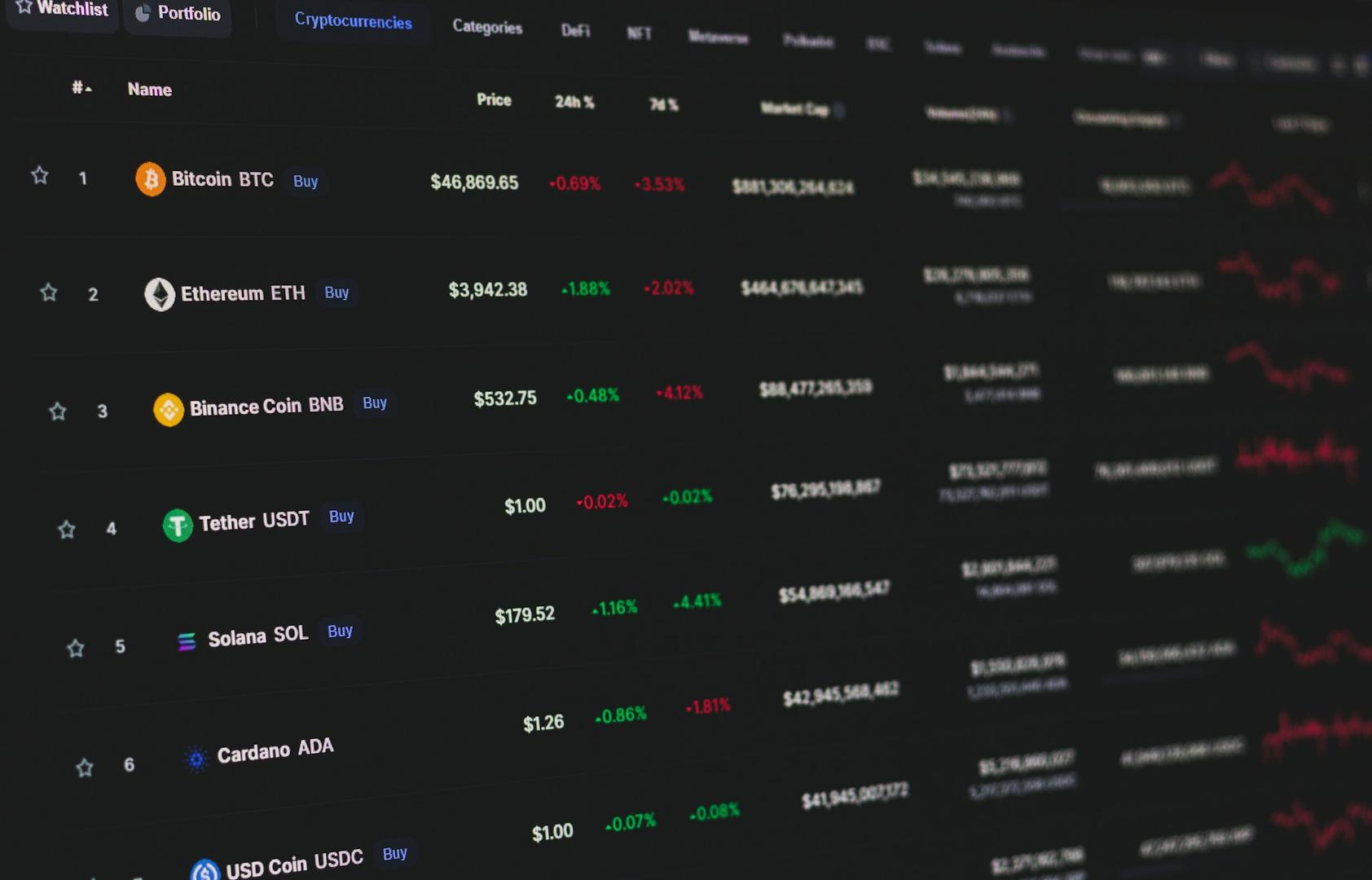
Image · CoinDesk
The gist
1-point summary · 1 min

21Shares says strong early flows into its new Hyperliquid ETF reflect growing investor demand for around-the-clock access to crypto and traditional assets.

  • 21Shares says strong early flows into its new Hyperliquid ETF reflect growing investor demand for around-the-clock access to crypto and traditional assets.

Skip to main contentCrypto NewsMay 19, 2026, 11:01 a.m. EDT2 min readLatest developments: 21Shares says its new Hyperliquid ETF saw strong early traction after launching in the U.S.Eli Ndinga, global head of research at 21Shares, told Jennifer Sanasie on CoinDesk's Public Keys that the product recorded more than $5 million in inflows within days of launch.The ETF also generated roughly $8 million in trading volume on Thursday alone, according to Ndinga.He said the firm previously launched a Hyperliquid product in Europe and viewed bringing the strategy to U.S. investors as a priority.The launch comes as asset managers race to roll out crypto-linked ETFs tied to newer blockchain ecosystems.What this means: 21Shares is betting Hyperliquid can evolve beyond crypto trading into a broader financial marketplace.Ndinga said Hyperliquid’s appeal comes from letting traders access crypto, oil, silver and gold markets around the clock.He pointed to trading activity during recent geopolitical tensions involving Iran, when investors used Hyperliquid after traditional markets closed.Silver trading on Hyperliquid at one point represented roughly 2% of CME silver volume, he said.Ndinga argued the platform reflects demand for 24/7 financial infrastructure that traditional exchanges cannot currently provide.The competition: The Hyperliquid ETF market is already getting crowded.Bitwise launched a competing Hyperliquid product days after 21Shares entered the market.Ndinga said 21Shares differentiates itself through its experience managing staking-enabled exchange-traded products.He said the firm relies on third-party staking providers rather than in-house infrastructure, arguing that approach improves transparency and reduces potential conflicts of interest.Ndinga said investors evaluating competing products should focus on custody, staking uptime and operational track records.Reading between the lines: Hyperliquid’s growth is attracting attention from traditional finance circles.Ndinga described Hyperliquid as “beyond a crypto story,” calling it a broader financial innovation story.He said traders increasingly view the platform as a way to gauge market sentiment across multiple asset classes.Ndinga cited pre-IPO token activity tied to AI chipmaker Cerebras as an example of traders using Hyperliquid to assess demand before public listings.He added that traditional finance professionals increasingly recognize the value of always-on trading infrastructure.The complication: Regulatory uncertainty remains one of the biggest risks for Hyperliquid.Hyperliquid is not available to U.S. users directly, though investors can gain exposure through ETFs tied to the HYPE token.Ndinga said Hyperliquid restricts access in certain jurisdictions to comply with local laws and sanctions requirements.He identified regulatory scrutiny and rising competition from rival trading platforms as the main bear-case risks for the ecosystem.Ndinga said proposed U.S. crypto legislation, including the Clarity Act, could eventually provide clearer rules for decentralized trading platforms.AI Disclaimer: Parts of this article were generated with the assistance from AI tools and reviewed by our editorial team to ensure accuracy and adherence to our standards. For more information, see CoinDesk's full AI Policy.12345678910

Integrity note  ·  Xela does not rewrite or paraphrase article content. The excerpt above is the source publication's own words, sanitized for display. For the full piece — including any quotes, charts, or images — read it at CoinDesk. Xela's rewritten version is off for this story, so there's no editorial angle attached — you're getting the source's reporting unfiltered. When the rewrite is on, we add a What this means block underneath with the operator/trader takeaway.

What people are saying

Discussion

Hot takes

0/280

Loading takes…

Comments

Discussion · 0

Sign in to comment, like, and save articles.

Sign in

Loading comments…

Keep readingCrypto & Web3 desk
See all in Crypto →
Bitcoin analysis shows what bulls need to do next to end this bearish 2026
·

Bitcoin analysis shows what bulls need to do next to end this bearish 2026

Bitcoin stabilizes near $63,000, but reclaiming $64,000 is the real test Bitcoin is stabilizing near $63,100 after buyers defended the lower part of its recent range. That is constructive, but it is not yet a confirmed recovery. BTC must first overcome resistance near $63,175-$63,270, while reclaiming and holding $64,000-$64,095 remains the more important test. Key takeaways for Bitcoin traders and investors Current position: BTC is holding above the previous month’s lower value boundary near $62,380. Immediate resistance: Buyers need to clear $63,130-$63,175, followed by $63,247-$63,270. Main recovery test: A sustained reclaim of $64,000-$64,095 would carry much more weight than a temporary bounce near $63,000. Major support: The broader $62,380-$62,535 region remains the most important defended zone. Bullish confirmation: Repeated closes, consolidation or a successful retest above $64,095 would show that Bitcoin is beginning to establish higher accepted value. Data note: The latest daily, four-hour and one-hour candles were incomplete when this analysis was prepared. Exchange-specific Bitcoin prices may also differ slightly. I'm also closely monitoring the digital asset space after , putting immediate pressure on lower order-flow shelves as bulls fight to defend structural trendlines. Regulatory headwinds also resurfaced as the , injecting fresh institutional hesitation into active trading books. Meanwhile, broader risk sentiment showed divergence across asset classes as , underscoring rotational breadth away from mega-cap tech into small-cap momentum. Macro headwinds and geopolitical posturing remain front and center following headline chatter that , all while monetary policy uncertainty lingers after amidst baseline model variances. Why Bitcoin’s stabilization is constructive but incomplete Bitcoin recently fell to approximately $62,535, where the decline attracted meaningful buying. Price subsequently recovered toward $63,100, strengthening the case that buyers are willing to defend the lower part of the previous month’s trading range. What stands out to me, however, is how little upward progress followed that buying. Several periods showed positive buying pressure, but BTC remained concentrated around $63,050 and repeatedly struggled to extend beyond $63,150-$63,175. In simple terms, buyers have shown that they can slow the decline, but they have not yet shown that they can move Bitcoin into a clearly higher trading range. This is the difference between stabilization and recovery: Stabilization means sellers are no longer pushing price lower with the same ease. Recovery means buyers are lifting price, holding above resistance and shifting the market’s most active trading area higher. Bitcoin has shown the first condition. The second still needs confirmation. Why $62,380 and $64,095 matter The previous month’s value area provides a useful map of where most Bitcoin trading took place: Value Area Low near $62,380: The lower boundary of the previous month’s heavily traded range. Point of Control near $64,095: The price that attracted the most trading activity during the month. Value Area High near $65,050: The upper boundary of the previous month’s accepted range. BTC is currently about $720 above the monthly Value Area Low, but almost $1,000 below the monthly Point of Control. Holding above $62,380 tells us that demand inside the previous month’s range has not completely failed. Remaining below $64,095 tells us that buyers have not regained control of the broader value structure. This is also why $64,095 may be more important than $64,000 itself. The round number attracts attention, but $64,095 represents the previous month’s busiest price area. A brief move above $64,000 could still become another failed breakout. Holding above $64,095 would provide stronger evidence that the market is accepting higher prices again. As discussed in our previous analysis, Bitcoin’s created technical repair work for buyers. That repair is not complete simply because BTC has bounced from $62,535. Bitcoin support and resistance levels to watch What would strengthen the bullish Bitcoin scenario? Swing traders should have 3 key price levels: The Value Area Low (VAL), Point of Control (POC) and Value Area High (VAH) of the previous month. Together, these levels map the previous month’s main area of accepted trading: the VAL marks its lower boundary, the VAH its upper boundary, and the POC the price where the most volume traded. Traders watch them because holding inside the area suggests continued acceptance, while a sustained break outside it may signal that the market is searching for a new value zone. The first constructive step would be sustained trade above $63,175. Buyers would then need to clear and hold above $63,247-$63,270. That would improve the probability of a move toward $63,350 and, eventually, the much larger $64,000-$64,095 test. A more convincing recovery would include: Bitcoin reclaiming $64,000. Price moving above the monthly point of control near $64,095. A pullback successfully defending the reclaimed area. Trading activity beginning to concentrate above $64,095 rather than immediately slipping back below it. If that sequence develops, approximately $65,050 becomes the next major value-area objective. What this means: Acceptance is more than touching a level. It means price spends time above it, survives pullbacks and begins treating the higher area as support. What would weaken the stabilization attempt? Failure to hold $62,920-$62,800 would weaken the current short-term base and increase the probability of another test of $62,535. The more serious bearish development would be sustained trade below $62,380. That would place BTC outside the previous month’s accepted value area and suggest that the market may need to search for demand at lower prices. Traders should still distinguish between a brief move below $62,380 and genuine acceptance beneath it. Crypto markets can produce fast stop-runs through visible support before reversing. Repeated closes or continued trading below the level would carry more bearish significance than a momentary sweep. What Bitcoin traders may consider watching Different traders may use these levels in different ways, at their own discretion: Short-term breakout confirmation: Watch whether BTC can break above $63,175 and successfully retest it, with $63,247-$63,270 providing the next validation area. Support-zone reaction: If BTC returns to $62,380-$62,535, watch whether buyers defend it again or whether selling begins to hold below the zone. Broader recovery confirmation: Treat $64,000-$64,095 as the decisive recovery test instead of assuming that every bounce from $63,000 marks a durable bottom. Because Bitcoin trades continuously, weekend conditions can sometimes involve thinner liquidity and less reliable breakouts. Confirmation through time, repeated closes or a successful retest may therefore be more useful than reacting to the first price spike. What should Bitcoin traders watch next? Bitcoin has defended the lower part of the previous month’s value area, but the rebound still needs to prove itself. The immediate challenge is to move beyond $63,175 and $63,270. The much larger test remains $64,000-$64,095. A successful reclaim would indicate that Bitcoin is returning toward the center of the previous month’s accepted value rather than merely bouncing from support. Until that happens, Bitcoin may be stabilizing, but it is not yet showing a fully confirmed bullish recovery. This analysis presents conditional market scenarios and opinions (not promises) at investingLive.com, not a guarantee of future performance. Traders should consider volatility, position size and their own risk limits before acting. This article was written by Itai Levitan at investinglive.com.

ForexliveSingle source
Newsletter

Track crypto & web3 every morning.

Daily digest tuned to this beat. The 5 stories most worth your time. Unsubscribe anytime.