Crypto & Web3·May 19, 2026

ETH price drops 40 percent as key developers leave

A wave of high-profile resignations at the Ethereum Foundation has ignited fresh debate over the platform’s future and internal cohesion. The departures gained momentum following the exit of Tomasz Stańczak, who served as co-director for on

CoinTurk News3 min readSingle source
ETH price drops 40 percent as key developers leave
Image · CoinTurk News
The gist
5-point summary · 1 min

A wave of high-profile resignations at the Ethereum Foundation has ignited fresh debate over the platform’s future and internal cohesion. The departures gained momentum following the exit of Tomasz Stańczak, who served as co-director for on

  • A wave of high-profile resignations at the Ethereum Foundation has ignited fresh debate over the platform’s future and internal cohesion.
  • Josh Stark, who contributed for seven years across multiple projects and co-led the Trillion Dollar Security Initiative, has left the foundation.
  • Reflecting on his seven years at the foundation, Carl Beek expressed pride in contributing to various projects.
  • The past month saw a 63 percent increase in the core team, although this is still below the 225 developers recorded in May last year.
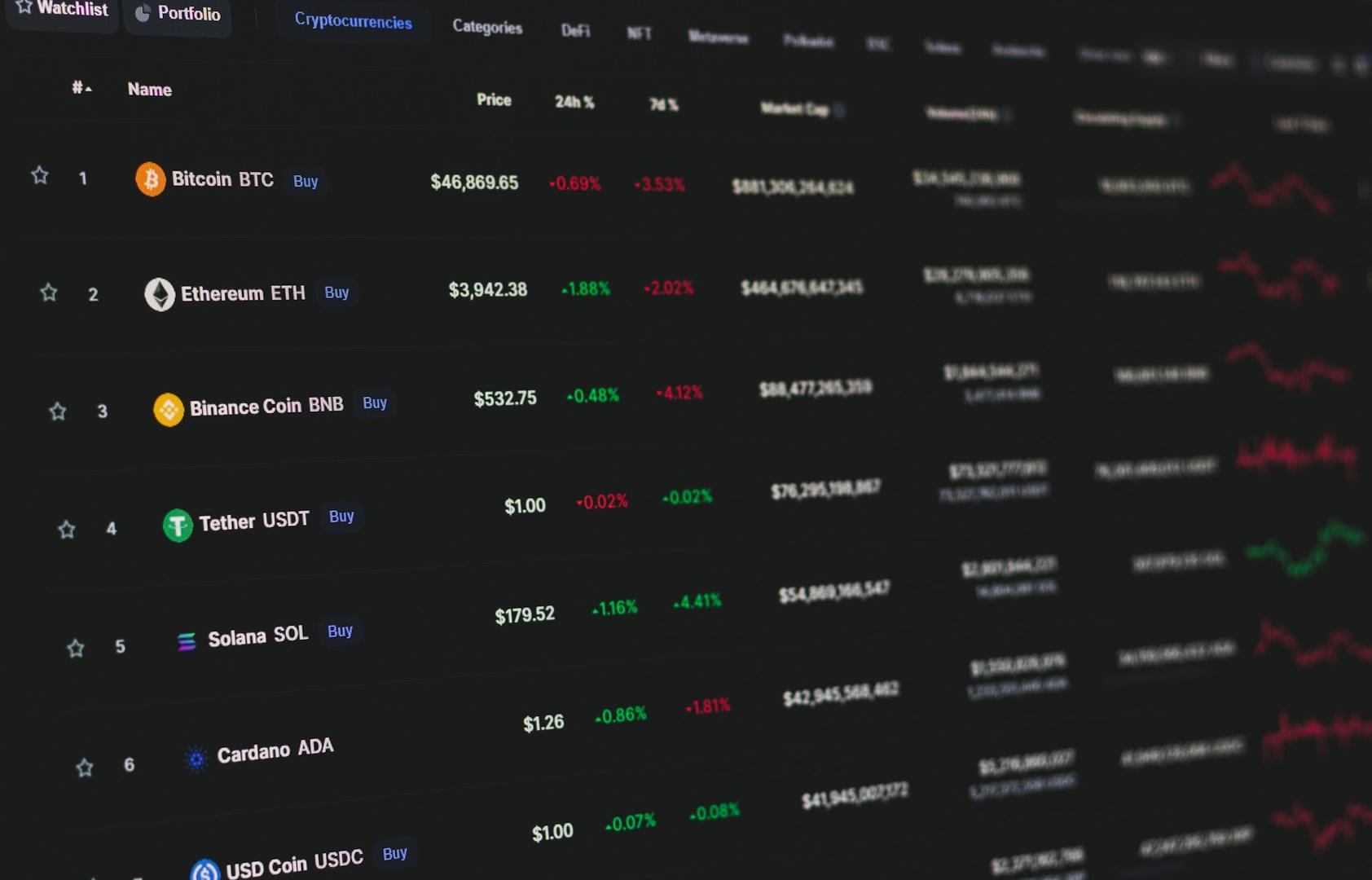
  • According to CryptoAppsy’s market data, ETH has fallen 40 percent over the past year to around $2,117.02.
$2,117.02
In this article

A wave of high-profile resignations at the Ethereum Foundation has ignited fresh debate over the platform’s future and internal cohesion. The departures gained momentum following the exit of Tomasz Stańczak, who served as co-director for only a year.Consecutive resignations and team reshufflingDepartures causing a stir in the communityDeveloper numbers and shifting technical landscapeFoundation policy, reserves, and ETH’s market trajectory Consecutive resignations and team reshufflingIn April and May, six contributors either left the Ethereum Foundation or took extended leaves, significantly impacting the core engineering and research teams. The organization’s Protocol Cluster unit, responsible for L1 protocol design, underwent restructuring after the departure of two influential engineers, Barnabé Monnot and Tim Beiko.Several long-serving members have also moved on. Josh Stark, who contributed for seven years across multiple projects and co-led the Trillion Dollar Security Initiative, has left the foundation. Likewise, after five years with the Protocol Guild, Trent Van Epps stepped down from his full-time position but plans to continue contributing to the Ethereum ecosystem on a part-time basis.One of the notable resignations in May was by Carl Beek, who had been with the Ethereum Foundation for over seven years and played a crucial role in developing the Beacon Chain. Reflecting on his seven years at the foundation, Carl Beek expressed pride in contributing to various projects. He highlighted his involvement in the KZG ceremony and the initial design of the Beacon Chain as among his most important experiences and noted his upcoming departure from the foundation.Shortly after, Julian Ma, a researcher in cryptoeconomics and mechanism design for four years, also announced he was leaving the organization.Julian Ma shared his gratitude for the opportunity to work with prominent figures over the past four years and emphasized the collaborative effort on many meaningful projects with the community.These two high-profile departures have fueled questions about the foundation’s future direction. Nevertheless, the foundation continues to stress its vision of supporting the ecosystem as a facilitator, rather than serving as a central authority.Developer numbers and shifting technical landscapeDespite the resignations, a significant level of developer activity remains within Ethereum. According to Token Terminal data, there are currently 169 core developers on the platform. The past month saw a 63 percent increase in the core team, although this is still below the 225 developers recorded in May last year. This points to a year-on-year decline, but also hints at a partial recovery recently.Data from Chainspect shows that a total of 9,744 Ethereum developers were actively contributing in the recent period. However, when considering overall ecosystem developer numbers, Solana now leads ahead of Ethereum.Foundation policy, reserves, and ETH’s market trajectoryThe Ethereum Foundation recently outlined its Mandate, signaling plans for a structural transformation. The initiative envisages a move away from direct, centralized influence towards a more background, supporting role, paving the way for the exit of some key contributors.Meanwhile, there’s been a reduction in the foundation’s ETH reserves, which now stand at 103,660 ETH. Part of these holdings have been staked, while some have reportedly been sold via BitMine.Amid these changes, expectations persist that Ethereum will remain a critical layer within the broader financial system. Yet, as decentralized projects face escalating cyber threats, the foundation’s internal restructuring takes on added significance.Following these latest developments, the price of ETH has seen a sharp decline. According to CryptoAppsy’s market data, ETH has fallen 40 percent over the past year to around $2,117.02. Despite the declining price, 31 percent of ETH’s circulating supply is staked on Beacon Chain, reflecting confidence in Ethereum’s long-term ecosystem.Disclaimer: The information contained in this article does not constitute investment advice. Investors should be aware that cryptocurrencies carry high volatility and therefore risk, and should conduct their own research.

Integrity note  ·  Xela does not rewrite or paraphrase article content. The excerpt above is the source publication's own words, sanitized for display. For the full piece — including any quotes, charts, or images — read it at CoinTurk News. Xela's rewritten version is off for this story, so there's no editorial angle attached — you're getting the source's reporting unfiltered. When the rewrite is on, we add a What this means block underneath with the operator/trader takeaway.

What people are saying

Discussion

Hot takes

0/280

Loading takes…

Comments

Discussion · 0

Sign in to comment, like, and save articles.

Sign in

Loading comments…

Keep readingCrypto & Web3 desk
See all in Crypto
Bitcoin analysis shows what bulls need to do next to end this bearish 2026
·

Bitcoin analysis shows what bulls need to do next to end this bearish 2026

Bitcoin stabilizes near $63,000, but reclaiming $64,000 is the real test Bitcoin is stabilizing near $63,100 after buyers defended the lower part of its recent range. That is constructive, but it is not yet a confirmed recovery. BTC must first overcome resistance near $63,175-$63,270, while reclaiming and holding $64,000-$64,095 remains the more important test. Key takeaways for Bitcoin traders and investors Current position: BTC is holding above the previous month’s lower value boundary near $62,380. Immediate resistance: Buyers need to clear $63,130-$63,175, followed by $63,247-$63,270. Main recovery test: A sustained reclaim of $64,000-$64,095 would carry much more weight than a temporary bounce near $63,000. Major support: The broader $62,380-$62,535 region remains the most important defended zone. Bullish confirmation: Repeated closes, consolidation or a successful retest above $64,095 would show that Bitcoin is beginning to establish higher accepted value. Data note: The latest daily, four-hour and one-hour candles were incomplete when this analysis was prepared. Exchange-specific Bitcoin prices may also differ slightly. I'm also closely monitoring the digital asset space after , putting immediate pressure on lower order-flow shelves as bulls fight to defend structural trendlines. Regulatory headwinds also resurfaced as the , injecting fresh institutional hesitation into active trading books. Meanwhile, broader risk sentiment showed divergence across asset classes as , underscoring rotational breadth away from mega-cap tech into small-cap momentum. Macro headwinds and geopolitical posturing remain front and center following headline chatter that , all while monetary policy uncertainty lingers after amidst baseline model variances. Why Bitcoin’s stabilization is constructive but incomplete Bitcoin recently fell to approximately $62,535, where the decline attracted meaningful buying. Price subsequently recovered toward $63,100, strengthening the case that buyers are willing to defend the lower part of the previous month’s trading range. What stands out to me, however, is how little upward progress followed that buying. Several periods showed positive buying pressure, but BTC remained concentrated around $63,050 and repeatedly struggled to extend beyond $63,150-$63,175. In simple terms, buyers have shown that they can slow the decline, but they have not yet shown that they can move Bitcoin into a clearly higher trading range. This is the difference between stabilization and recovery: Stabilization means sellers are no longer pushing price lower with the same ease. Recovery means buyers are lifting price, holding above resistance and shifting the market’s most active trading area higher. Bitcoin has shown the first condition. The second still needs confirmation. Why $62,380 and $64,095 matter The previous month’s value area provides a useful map of where most Bitcoin trading took place: Value Area Low near $62,380: The lower boundary of the previous month’s heavily traded range. Point of Control near $64,095: The price that attracted the most trading activity during the month. Value Area High near $65,050: The upper boundary of the previous month’s accepted range. BTC is currently about $720 above the monthly Value Area Low, but almost $1,000 below the monthly Point of Control. Holding above $62,380 tells us that demand inside the previous month’s range has not completely failed. Remaining below $64,095 tells us that buyers have not regained control of the broader value structure. This is also why $64,095 may be more important than $64,000 itself. The round number attracts attention, but $64,095 represents the previous month’s busiest price area. A brief move above $64,000 could still become another failed breakout. Holding above $64,095 would provide stronger evidence that the market is accepting higher prices again. As discussed in our previous analysis, Bitcoin’s created technical repair work for buyers. That repair is not complete simply because BTC has bounced from $62,535. Bitcoin support and resistance levels to watch What would strengthen the bullish Bitcoin scenario? Swing traders should have 3 key price levels: The Value Area Low (VAL), Point of Control (POC) and Value Area High (VAH) of the previous month. Together, these levels map the previous month’s main area of accepted trading: the VAL marks its lower boundary, the VAH its upper boundary, and the POC the price where the most volume traded. Traders watch them because holding inside the area suggests continued acceptance, while a sustained break outside it may signal that the market is searching for a new value zone. The first constructive step would be sustained trade above $63,175. Buyers would then need to clear and hold above $63,247-$63,270. That would improve the probability of a move toward $63,350 and, eventually, the much larger $64,000-$64,095 test. A more convincing recovery would include: Bitcoin reclaiming $64,000. Price moving above the monthly point of control near $64,095. A pullback successfully defending the reclaimed area. Trading activity beginning to concentrate above $64,095 rather than immediately slipping back below it. If that sequence develops, approximately $65,050 becomes the next major value-area objective. What this means: Acceptance is more than touching a level. It means price spends time above it, survives pullbacks and begins treating the higher area as support. What would weaken the stabilization attempt? Failure to hold $62,920-$62,800 would weaken the current short-term base and increase the probability of another test of $62,535. The more serious bearish development would be sustained trade below $62,380. That would place BTC outside the previous month’s accepted value area and suggest that the market may need to search for demand at lower prices. Traders should still distinguish between a brief move below $62,380 and genuine acceptance beneath it. Crypto markets can produce fast stop-runs through visible support before reversing. Repeated closes or continued trading below the level would carry more bearish significance than a momentary sweep. What Bitcoin traders may consider watching Different traders may use these levels in different ways, at their own discretion: Short-term breakout confirmation: Watch whether BTC can break above $63,175 and successfully retest it, with $63,247-$63,270 providing the next validation area. Support-zone reaction: If BTC returns to $62,380-$62,535, watch whether buyers defend it again or whether selling begins to hold below the zone. Broader recovery confirmation: Treat $64,000-$64,095 as the decisive recovery test instead of assuming that every bounce from $63,000 marks a durable bottom. Because Bitcoin trades continuously, weekend conditions can sometimes involve thinner liquidity and less reliable breakouts. Confirmation through time, repeated closes or a successful retest may therefore be more useful than reacting to the first price spike. What should Bitcoin traders watch next? Bitcoin has defended the lower part of the previous month’s value area, but the rebound still needs to prove itself. The immediate challenge is to move beyond $63,175 and $63,270. The much larger test remains $64,000-$64,095. A successful reclaim would indicate that Bitcoin is returning toward the center of the previous month’s accepted value rather than merely bouncing from support. Until that happens, Bitcoin may be stabilizing, but it is not yet showing a fully confirmed bullish recovery. This analysis presents conditional market scenarios and opinions (not promises) at investingLive.com, not a guarantee of future performance. Traders should consider volatility, position size and their own risk limits before acting. This article was written by Itai Levitan at investinglive.com.

ForexliveSingle source
Newsletter

Track crypto & web3 every morning.

Daily digest tuned to this beat. The 5 stories most worth your time. Unsubscribe anytime.