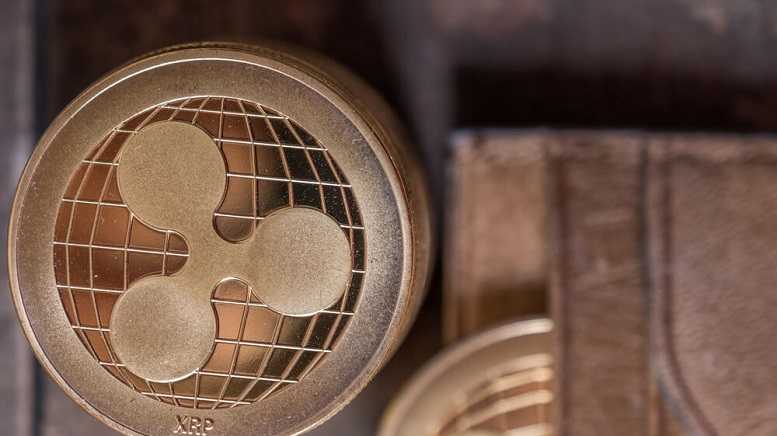
Jun 15, 2026, 2:25 p.m. 3 min read(Richard Drury/Getty Images)The crypto industry’s leading founders, CEOs and investors recently signed a single letter to Senate leaders with one request: do not weaken the Clarity Act's protections for software developers. These are competitors, rivals for talent, capital and market share. Yet they agree on this because they understand what is at stake. Strip the developer protections out of the bill, and the United States risks pushing the people who build this technology offshore and forfeiting its lead in the next era of finance.Congress is closer than it has ever been to giving digital assets a real regulatory framework. The Senate Banking Committee advanced the Clarity Act with bipartisan support, and the bill is now poised to move to the Senate floor for a full vote.But one provision is under threat. The Blockchain Regulatory Certainty Act, or BRCA, is the foundation everything else rests on. It draws a bright line: if you write open-source software, run a node, or help validate transactions, and you never take custody or control of anyone's money, you are not a money transmitter under federal law.The rest of the Clarity Act depends on that guarantee, because there is no digital asset market to regulate if the people who build it cannot afford to build it in the U.S. The provision survived the committee markup intact, despite a filed amendment that would have gutted it, and it must stay in through the final vote, fully and without dilution.Here is why this matters to people who will never read a word of the statute. The engineers who write this software, from core Solana contributors to the designers of new DeFi protocols, publish code that anyone in the world can download and use. They hold no money. They cannot freeze an account or move funds, because they never touch them. Treating a software developer like a bank teller makes about as much sense as calling an email app's engineer a mail carrier. Treasury's 2019 FinCEN guidance already recognized that merely providing software or network tools used by money transmitters does not, by itself, make someone a money transmitter. The BRCA aligns the criminal code with that standard.When laws are murky, regulators and prosecutors fill the gap. Treasury has pursued builders who wrote and released software but never held a customer's assets. The conviction of Tornado Cash developer Roman Storm for conspiring to operate an unlicensed money transmitting business is the case people know, and it fits a pattern that should worry anyone who cares about American innovation. Cases like it are already pushing developers overseas.The numbers show it. The U.S. share of the world's open-source crypto developers has fallen from 38% in 2015 to roughly 19% in the latest annual count. Every one of those engineers represents jobs, tax revenue, and technology that benefits everyone. America does not lead industries it pushes offshore. We can keep this work here, under American rules and oversight, or watch it move to Singapore and Abu Dhabi and wonder later why we let it go.Some worry that protecting developers means going soft on crime. It does not. The BRCA does not legalize money laundering, sanctions evasion, fraud, trafficking, or terrorist financing, and anyone who actually holds customer funds remains subject to the same anti-money-laundering rules as before. Clear boundaries do not weaken enforcement. They strengthen it by separating lawful builders from the bad actors prosecutors should be chasing.The BRCA has never been a partisan issue. In the Senate, it is carried by Sens. Cynthia Lummis (R-WY) and Ron Wyden (D-OR). In the House, Majority Whip Tom Emmer (R-MN) and Rep. Ritchie Torres (D-NY) lead it together. That kind of agreement is rare in Washington. It reflects something that predates crypto: a country that protects its builders is a country those builders choose to stay in.The Clarity Act is the best chance in a generation to replace enforcement by surprise with durable, predictable rules. That is exactly why the developer protections cannot be weakened in the home stretch. A bill that regulates exchanges and token issuers while leaving the builders of the underlying technology exposed would undermine its own purpose and hand the industry's future to other countries.Years ago, I told a skeptical Senate that crypto was here for good. The Clarity Act is the moment to prove it. Keep the BRCA intact, protect the builders, and let America remain the home of innovation for decades to come.Note: The views expressed in this column are those of the author and do not necessarily reflect those of CoinDesk, Inc. or its owners and affiliates.12345678910
Crypto & Web3·Jun 15, 2026
If America wants to lead in crypto, it must protect the people who build it
Despite the Clarity Act’s advancement toward the finish line, there’s one provision under threat for builders that can’t be overlooked, argues Smith.
CoinDesk4 min readVerified

The gist
5-point summary · 1 minDespite the Clarity Act’s advancement toward the finish line, there’s one provision under threat for builders that can’t be overlooked, argues Smith.
- 3 min read(Richard Drury/Getty Images)The crypto industry’s leading founders, CEOs and investors recently signed a single letter to Senate leaders with one request: do not weaken the Clarity Act's protections for software developers.
- The Senate Banking Committee advanced the Clarity Act with bipartisan support, and the bill is now poised to move to the Senate floor for a full vote.But one provision is under threat.
- The Blockchain Regulatory Certainty Act, or BRCA, is the foundation everything else rests on.
- Treasury's 2019 FinCEN guidance already recognized that merely providing software or network tools used by money transmitters does not, by itself, make someone a money transmitter.
- The U.S. share of the world's open-source crypto developers has fallen from 38% in 2015 to roughly 19% in the latest annual count.
38%19%
In this article
Integrity note · Xela does not rewrite or paraphrase article content. The excerpt above is the source publication's own words, sanitized for display. For the full piece — including any quotes, charts, or images — read it at CoinDesk. Xela's rewritten version is off for this story, so there's no editorial angle attached — you're getting the source's reporting unfiltered. When the rewrite is on, we add a What this means block underneath with the operator/trader takeaway.
What people are saying
Discussion
Hot takes
0/280
Loading takes…
Comments
Discussion · 0
Sign in to comment, like, and save articles.
Sign inLoading comments…