Jul 21, 2026, 1:38 p.m. 3 min readSummaryMoneyGram CEO Anthony Soohoo said the company's blockchain strategy is focused on modernizing cross-border payments, by using blockchain infrastructure to make remittances faster, cheaper and more transparent while keeping the technology invisible to customers.While Stellar remains a core blockchain partner, MoneyGram is expanding its blockchain footprint through validator roles on Solana and Tempo and sees its MGUSD stablecoin as a way to build more financial products within its own ecosystem.MoneyGram has spent years experimenting with blockchain technology, but CEO Anthony Soohoo says the company’s latest crypto-related revelation is that it works best when customers don’t have to think about it.Speaking in an interview with CoinDesk, Soohoo said MoneyGram's blockchain strategy has evolved from early experimentation into a broader effort to modernize the company's global payments infrastructure. The remittance giant, which serves roughly 60 million active customers, sees blockchain less as a consumer-facing feature than as a way to make cross-border payments faster, cheaper and more transparent."What you're always looking for is how to leverage technology to run your business more efficiently and effectively," Soohoo said. "The use case is what do our customers want, and how do we solve that for them?"MoneyGram's customers are primarily people sending money to friends and family abroad, making speed and cost two of the biggest priorities. Traditional cross-border payments can take days to settle and often rely on banking hours and multiple intermediaries, making the experience cumbersome and expensive. But the firm believes that blockchain can streamline that process by enabling around-the-clock settlement and lowering operating costs, saving the company hopes to eventually pass on to customers.In attempting to modernize and better meet its customers’ needs, MoneyGram has partnered with the Stellar network, which has underpinned many of the company's blockchain initiatives over the past five years. But the company has also started exploring other ecosystems: while Stellar remains a core partner, MoneyGram has also become a validator on Solana and Tempo. For MoneyGram, the immediate payoff isn't speculative crypto activity, it's replacing legacy financial rails.Today's cross-border settlement still largely depends on banking hours and weekday processing. Blockchain-based infrastructure, Soohoo argued, enables real-time settlement around the clock, reducing operational costs while improving the customer experience."We believe if we do it right, we can achieve all three," he said, referring to helping customers save time, effort and money. Instant settlement also allows MoneyGram to lower back-office costs, savings the company hopes to eventually pass on through lower prices. Currently, MoneyGram’s fees start at $1.89 and vary depending on what country you send them to.Soohoo doesn't believe consumers need to understand the technology powering those improvements. He compared blockchain to the processors inside Apple's iPhone."I can't tell you what processor is inside my iPhone," he said. "I just know it's faster." In the same way, he argued, remittance customers care about whether money arrives quickly and reliably, not whether it traveled over a blockchain.That philosophy also explains the company's recently introduced stablecoin strategy. Rather than building a token designed for institutional markets or crypto traders, MoneyGram's MGUSD is intended primarily for use inside the company's own payments ecosystem. Soohoo said owning the infrastructure gives MoneyGram greater control over costs and future product development, including wallet features, rewards programs and other financial services."If someone's sending money from MoneyGram to MoneyGram, why shouldn't it be our own coin?" he said, describing the stablecoin as part of a broader effort toward vertical integration.Soohoo, who joined MoneyGram roughly 18 months ago after leading digital transformations at Walmart, said his own view of blockchain has expanded since arriving at the company."The opportunity with blockchain and digital currencies is actually bigger than I had anticipated," he said. Still, he cautioned that many financial institutions remain overly focused on announcing blockchain initiatives rather than solving customer problems. "The common misconception...is that they get lost in the product," Soohoo said. "These are infrastructure conversations. They're not consumer conversations."Ultimately, MoneyGram's blockchain ambitions extend beyond remittances. Over the next three to five years, Soohoo said the company's goal is to become the primary financial institution for its customers, many of whom are underbanked, and use blockchain as one of the technologies that helps democratize access to financial services.12345678910TRON Network - Q2 2026TRON Network - Q2 2026In Q2; TRON's stablecoin dominance rose to 28.7%, USDT supply on TRON hit $89B ATH, $89M in protocol fees (2nd to Hyperliquid), TRX +3%, and deepening institutional & agentic reach.55 minutes agoIn Q2; TRON's stablecoin dominance rose to 28.7%, USDT supply on TRON hit $89B ATH, $89M in protocol fees (2nd to Hyperliquid), TRX +3%, and deepening institutional & agentic reach.Why it matters:In Q2; TRON's stablecoin dominance rose to 28.7%, USDT supply on TRON hit $89B ATH, $89M in protocol fees (2nd to Hyperliquid), TRX +3%, and deepening institutional & agentic reach.View Full Report
Crypto & Web3·Jul 21, 2026
MoneyGram's CEO says blockchain works best when customers don't know it's there
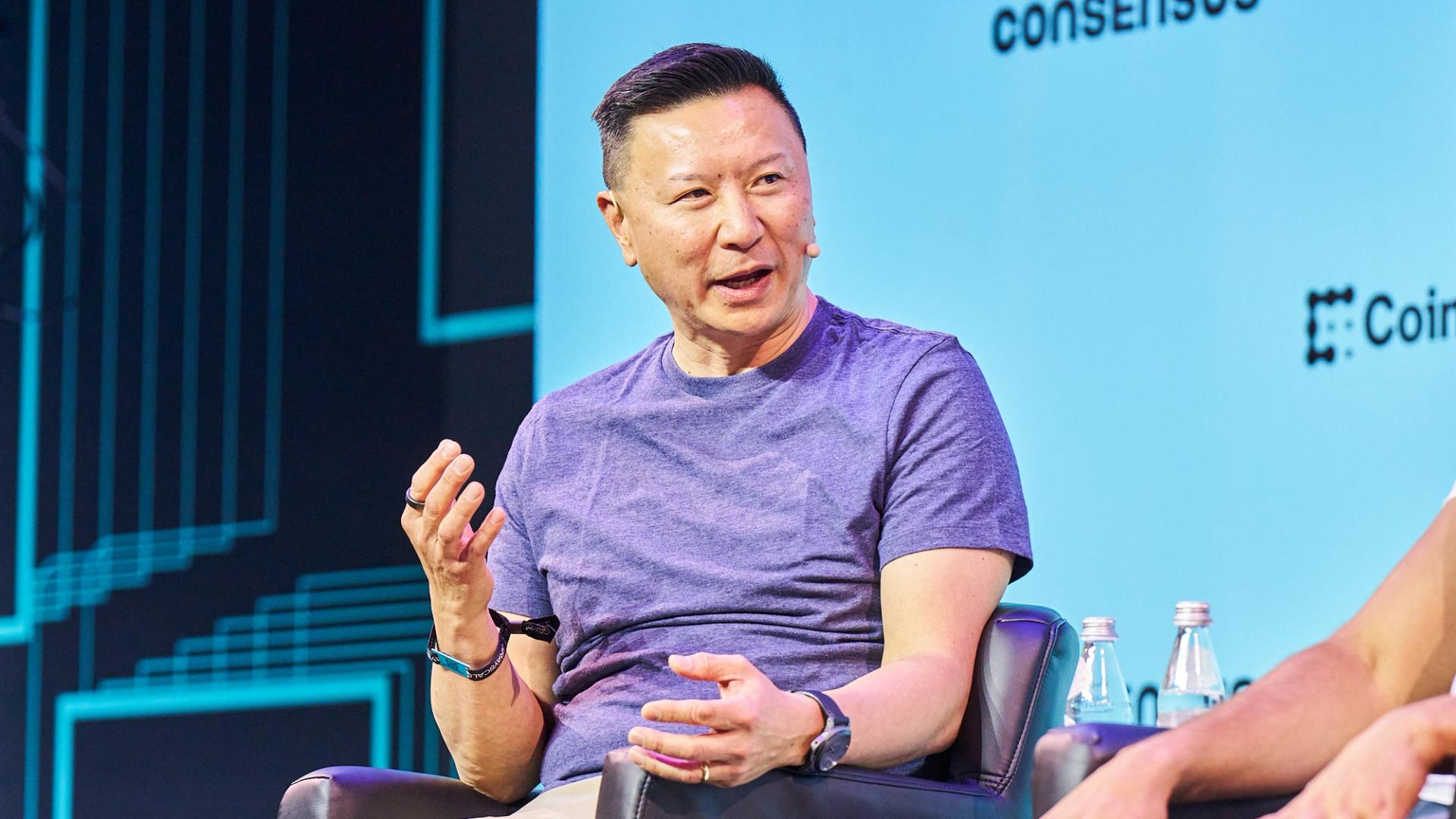
In an interview with CoinDesk, MoneyGram CEO Anthony Soohoo said that their blockchain strategy has evolved from early experimentation into a broader effort to modernize the company's global payments infrastructure.
CoinDesk4 min readVerified
The gist
5-point summary · 1 minIn an interview with CoinDesk, MoneyGram CEO Anthony Soohoo said that their blockchain strategy has evolved from early experimentation into a broader effort to modernize the company's global payments infrastructure.
- "The use case is what do our customers want, and how do we solve that for them?"MoneyGram's customers are primarily people sending money to friends and family abroad, making speed and cost two of the biggest priorities.
- Currently, MoneyGram’s fees start at $1.89 and vary depending on what country you send them to.Soohoo doesn't believe consumers need to understand the technology powering those improvements.
- He compared blockchain to the processors inside Apple's iPhone."I can't tell you what processor is inside my iPhone," he said.
- Rather than building a token designed for institutional markets or crypto traders, MoneyGram's MGUSD is intended primarily for use inside the company's own payments ecosystem.
- They're not consumer conversations."Ultimately, MoneyGram's blockchain ambitions extend beyond remittances.
$1.89$89B$89M28.7%+3%
In this article
Integrity note · Xela does not rewrite or paraphrase article content. The excerpt above is the source publication's own words, sanitized for display. For the full piece — including any quotes, charts, or images — read it at CoinDesk. Xela's rewritten version is off for this story, so there's no editorial angle attached — you're getting the source's reporting unfiltered. When the rewrite is on, we add a What this means block underneath with the operator/trader takeaway.
What people are saying
Discussion
Hot takes
0/280
Loading takes…
Comments
Discussion · 0
Sign in to comment, like, and save articles.
Sign inLoading comments…