Crypto & Web3·May 19, 2026

National Trust Charters For Crypto Under Fire—Senator Warren Says It Goes Beyond The Law

Senator Elizabeth Warren is taking a new aim at the crypto industry, now challenging how the Office of the Comptroller of the Currency (OCC) has handled national trust bank charters for digital asset firms. Her latest concern centers on the

Bitcoinist2 min readSingle source
National Trust Charters For Crypto Under Fire—Senator Warren Says It Goes Beyond The Law
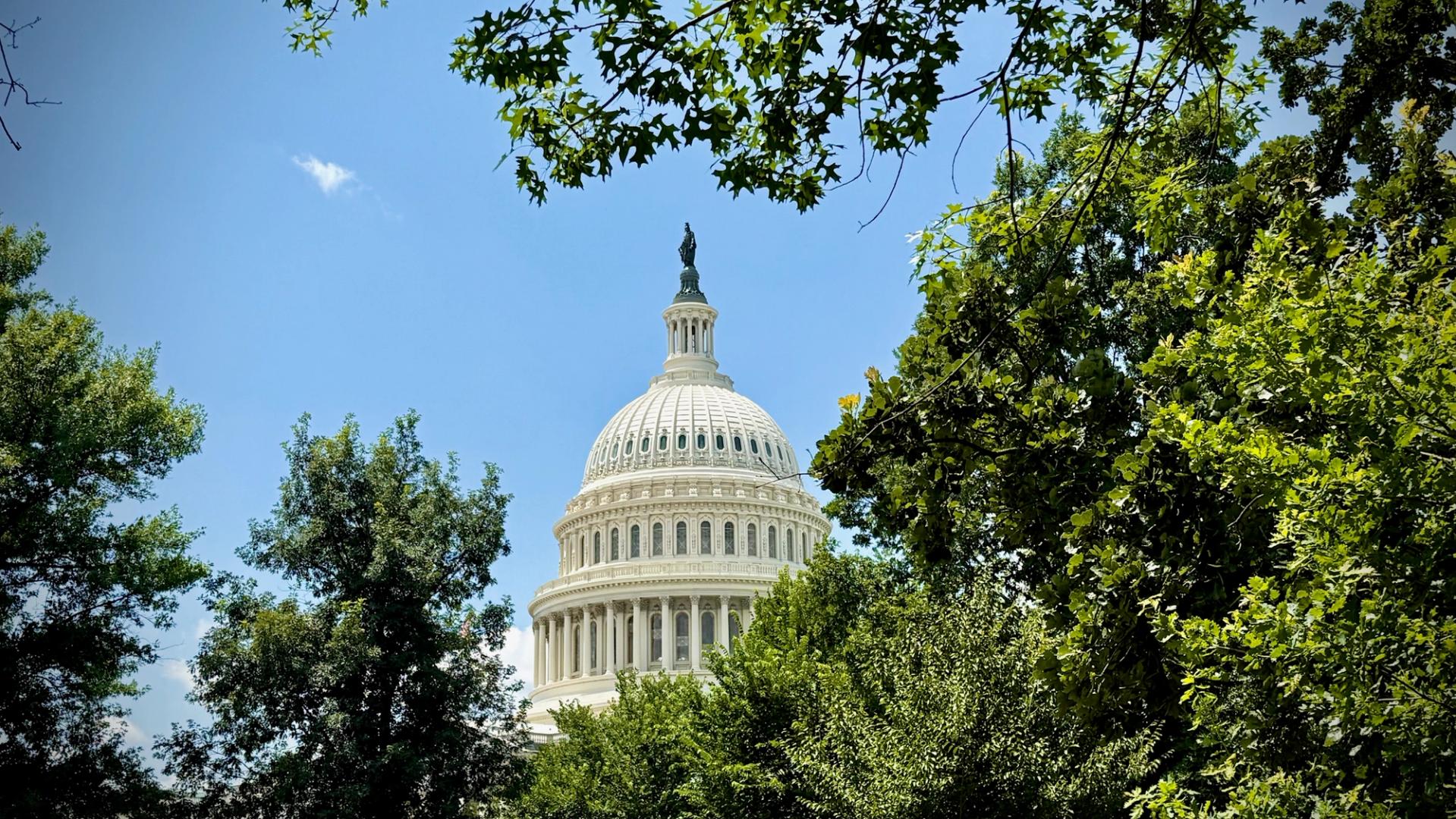
Image · Bitcoinist
The gist
5-point summary · 1 min

Senator Elizabeth Warren is taking a new aim at the crypto industry, now challenging how the Office of the Comptroller of the Currency (OCC) has handled national trust bank charters for digital asset firms. Her latest concern centers on the

  • Warren Challenges OCC On Crypto Charters Bloomberg reports that Warren’s argument is that at least some of the companies appear to be “seemingly ineligible” for the type of charter they are receiving.
  • Others, such as Coinbase (COIN), received conditional approval from the OCC to establish Coinbase National Trust Company.
  • Around the same timeframe, Kraken’s parent company, Payward, also filed an application seeking approval for a National Trust Company charter.
  • However, Warren’s critique is not only about what the trust charters allow today, but also about where she believes some firms may be headed next.
  • Traditional banks have voiced their own apprehension throughout the year, arguing that the OCC’s approvals stretch the historical intent behind the national trust bank charter.
In this article

Senator Elizabeth Warren is taking a new aim at the crypto industry, now challenging how the Office of the Comptroller of the Currency (OCC) has handled national trust bank charters for digital asset firms. Her latest concern centers on the OCC’s approvals—some granted on a conditional basis over recent months—at a time when the conventional banking sector has already been raising objections throughout the year. Warren Challenges OCC On Crypto Charters Bloomberg reports that Warren’s argument is that at least some of the companies appear to be “seemingly ineligible” for the type of charter they are receiving. In her letter to Jonathan Gould, the head of the OCC, the Senator said the regulator has approved at least nine national trust charters for crypto companies that, in her view, “appear to go far beyond the narrow set of activities permitted by law.” Warren went further, describing what she sees as an “apparent violation of the National Bank Act.” Among the approvals mentioned are those granted to crypto giants such as Ripple, Circle (CRCL), BitGo, Fidelity, and Paxos in December of last year. Others, such as Coinbase (COIN), received conditional approval from the OCC to establish Coinbase National Trust Company. Around the same timeframe, Kraken’s parent company, Payward, also filed an application seeking approval for a National Trust Company charter. Those approvals would allow these companies to manage and hold assets on behalf of customers—an arrangement that could speed up payment settlement compared with older processing timelines. However, Warren’s critique is not only about what the trust charters allow today, but also about where she believes some firms may be headed next. OCC’s Defense Per the report, the Massachusetts Democrat argued that some companies are trying to move past traditional custody and into business areas that look more like banking operations. That includes activities such as lending, payments, and running trading platform-type services. In her view, easing rules for trust companies this year could effectively enable crypto firms to broaden their financial activities too far, without the same level of constraints and oversight that typically apply to banks. Warren framed the concern as follows: if crypto firms are permitted to engage in bank-like businesses without “the same regulations and safeguards,” it could create problems for consumer protection and for overall stability in the financial system. Yet, the Senator is not the only critic of the OCC’s approach. Traditional banks have voiced their own apprehension throughout the year, arguing that the OCC’s approvals stretch the historical intent behind the national trust bank charter. The OCC, through Comptroller of the Currency Jonathan Gould, has defended its actions. Last year, Gould emphasized that bringing new entrants into the federal banking system could improve competition and deliver additional products and services. From his perspective, the OCC’s approach is beneficial for both consumers and the broader banking industry, and it supports modernization rather than regulatory dilution. Featured image created with OpenArt, chart from TradingView.com

Integrity note  ·  Xela does not rewrite or paraphrase article content. The excerpt above is the source publication's own words, sanitized for display. For the full piece — including any quotes, charts, or images — read it at Bitcoinist. Xela's rewritten version is off for this story, so there's no editorial angle attached — you're getting the source's reporting unfiltered. When the rewrite is on, we add a What this means block underneath with the operator/trader takeaway.

What people are saying

Discussion

Hot takes

0/280

Loading takes…

Comments

Discussion · 0

Sign in to comment, like, and save articles.

Sign in

Loading comments…

Keep readingCrypto & Web3 desk
See all in Crypto
Bitcoin analysis shows what bulls need to do next to end this bearish 2026
·

Bitcoin analysis shows what bulls need to do next to end this bearish 2026

Bitcoin stabilizes near $63,000, but reclaiming $64,000 is the real test Bitcoin is stabilizing near $63,100 after buyers defended the lower part of its recent range. That is constructive, but it is not yet a confirmed recovery. BTC must first overcome resistance near $63,175-$63,270, while reclaiming and holding $64,000-$64,095 remains the more important test. Key takeaways for Bitcoin traders and investors Current position: BTC is holding above the previous month’s lower value boundary near $62,380. Immediate resistance: Buyers need to clear $63,130-$63,175, followed by $63,247-$63,270. Main recovery test: A sustained reclaim of $64,000-$64,095 would carry much more weight than a temporary bounce near $63,000. Major support: The broader $62,380-$62,535 region remains the most important defended zone. Bullish confirmation: Repeated closes, consolidation or a successful retest above $64,095 would show that Bitcoin is beginning to establish higher accepted value. Data note: The latest daily, four-hour and one-hour candles were incomplete when this analysis was prepared. Exchange-specific Bitcoin prices may also differ slightly. I'm also closely monitoring the digital asset space after , putting immediate pressure on lower order-flow shelves as bulls fight to defend structural trendlines. Regulatory headwinds also resurfaced as the , injecting fresh institutional hesitation into active trading books. Meanwhile, broader risk sentiment showed divergence across asset classes as , underscoring rotational breadth away from mega-cap tech into small-cap momentum. Macro headwinds and geopolitical posturing remain front and center following headline chatter that , all while monetary policy uncertainty lingers after amidst baseline model variances. Why Bitcoin’s stabilization is constructive but incomplete Bitcoin recently fell to approximately $62,535, where the decline attracted meaningful buying. Price subsequently recovered toward $63,100, strengthening the case that buyers are willing to defend the lower part of the previous month’s trading range. What stands out to me, however, is how little upward progress followed that buying. Several periods showed positive buying pressure, but BTC remained concentrated around $63,050 and repeatedly struggled to extend beyond $63,150-$63,175. In simple terms, buyers have shown that they can slow the decline, but they have not yet shown that they can move Bitcoin into a clearly higher trading range. This is the difference between stabilization and recovery: Stabilization means sellers are no longer pushing price lower with the same ease. Recovery means buyers are lifting price, holding above resistance and shifting the market’s most active trading area higher. Bitcoin has shown the first condition. The second still needs confirmation. Why $62,380 and $64,095 matter The previous month’s value area provides a useful map of where most Bitcoin trading took place: Value Area Low near $62,380: The lower boundary of the previous month’s heavily traded range. Point of Control near $64,095: The price that attracted the most trading activity during the month. Value Area High near $65,050: The upper boundary of the previous month’s accepted range. BTC is currently about $720 above the monthly Value Area Low, but almost $1,000 below the monthly Point of Control. Holding above $62,380 tells us that demand inside the previous month’s range has not completely failed. Remaining below $64,095 tells us that buyers have not regained control of the broader value structure. This is also why $64,095 may be more important than $64,000 itself. The round number attracts attention, but $64,095 represents the previous month’s busiest price area. A brief move above $64,000 could still become another failed breakout. Holding above $64,095 would provide stronger evidence that the market is accepting higher prices again. As discussed in our previous analysis, Bitcoin’s created technical repair work for buyers. That repair is not complete simply because BTC has bounced from $62,535. Bitcoin support and resistance levels to watch What would strengthen the bullish Bitcoin scenario? Swing traders should have 3 key price levels: The Value Area Low (VAL), Point of Control (POC) and Value Area High (VAH) of the previous month. Together, these levels map the previous month’s main area of accepted trading: the VAL marks its lower boundary, the VAH its upper boundary, and the POC the price where the most volume traded. Traders watch them because holding inside the area suggests continued acceptance, while a sustained break outside it may signal that the market is searching for a new value zone. The first constructive step would be sustained trade above $63,175. Buyers would then need to clear and hold above $63,247-$63,270. That would improve the probability of a move toward $63,350 and, eventually, the much larger $64,000-$64,095 test. A more convincing recovery would include: Bitcoin reclaiming $64,000. Price moving above the monthly point of control near $64,095. A pullback successfully defending the reclaimed area. Trading activity beginning to concentrate above $64,095 rather than immediately slipping back below it. If that sequence develops, approximately $65,050 becomes the next major value-area objective. What this means: Acceptance is more than touching a level. It means price spends time above it, survives pullbacks and begins treating the higher area as support. What would weaken the stabilization attempt? Failure to hold $62,920-$62,800 would weaken the current short-term base and increase the probability of another test of $62,535. The more serious bearish development would be sustained trade below $62,380. That would place BTC outside the previous month’s accepted value area and suggest that the market may need to search for demand at lower prices. Traders should still distinguish between a brief move below $62,380 and genuine acceptance beneath it. Crypto markets can produce fast stop-runs through visible support before reversing. Repeated closes or continued trading below the level would carry more bearish significance than a momentary sweep. What Bitcoin traders may consider watching Different traders may use these levels in different ways, at their own discretion: Short-term breakout confirmation: Watch whether BTC can break above $63,175 and successfully retest it, with $63,247-$63,270 providing the next validation area. Support-zone reaction: If BTC returns to $62,380-$62,535, watch whether buyers defend it again or whether selling begins to hold below the zone. Broader recovery confirmation: Treat $64,000-$64,095 as the decisive recovery test instead of assuming that every bounce from $63,000 marks a durable bottom. Because Bitcoin trades continuously, weekend conditions can sometimes involve thinner liquidity and less reliable breakouts. Confirmation through time, repeated closes or a successful retest may therefore be more useful than reacting to the first price spike. What should Bitcoin traders watch next? Bitcoin has defended the lower part of the previous month’s value area, but the rebound still needs to prove itself. The immediate challenge is to move beyond $63,175 and $63,270. The much larger test remains $64,000-$64,095. A successful reclaim would indicate that Bitcoin is returning toward the center of the previous month’s accepted value rather than merely bouncing from support. Until that happens, Bitcoin may be stabilizing, but it is not yet showing a fully confirmed bullish recovery. This analysis presents conditional market scenarios and opinions (not promises) at investingLive.com, not a guarantee of future performance. Traders should consider volatility, position size and their own risk limits before acting. This article was written by Itai Levitan at investinglive.com.

ForexliveSingle source
Newsletter

Track crypto & web3 every morning.

Daily digest tuned to this beat. The 5 stories most worth your time. Unsubscribe anytime.