Crypto & Web3·May 20, 2026

Singapore Pulls Bsquared Crypto License, Tether Acquires SoftBank's XXI Stake

Crypto News Singapore's central bank stripped Bsquared Technology of its crypto payment licence on Wednesday, ending the firm's authorisation to provide digital payment token services in the city-state after just 16 months of operation. The

CoinOtag3 min readSingle source
Singapore Pulls Bsquared Crypto License, Tether Acquires SoftBank's XXI Stake
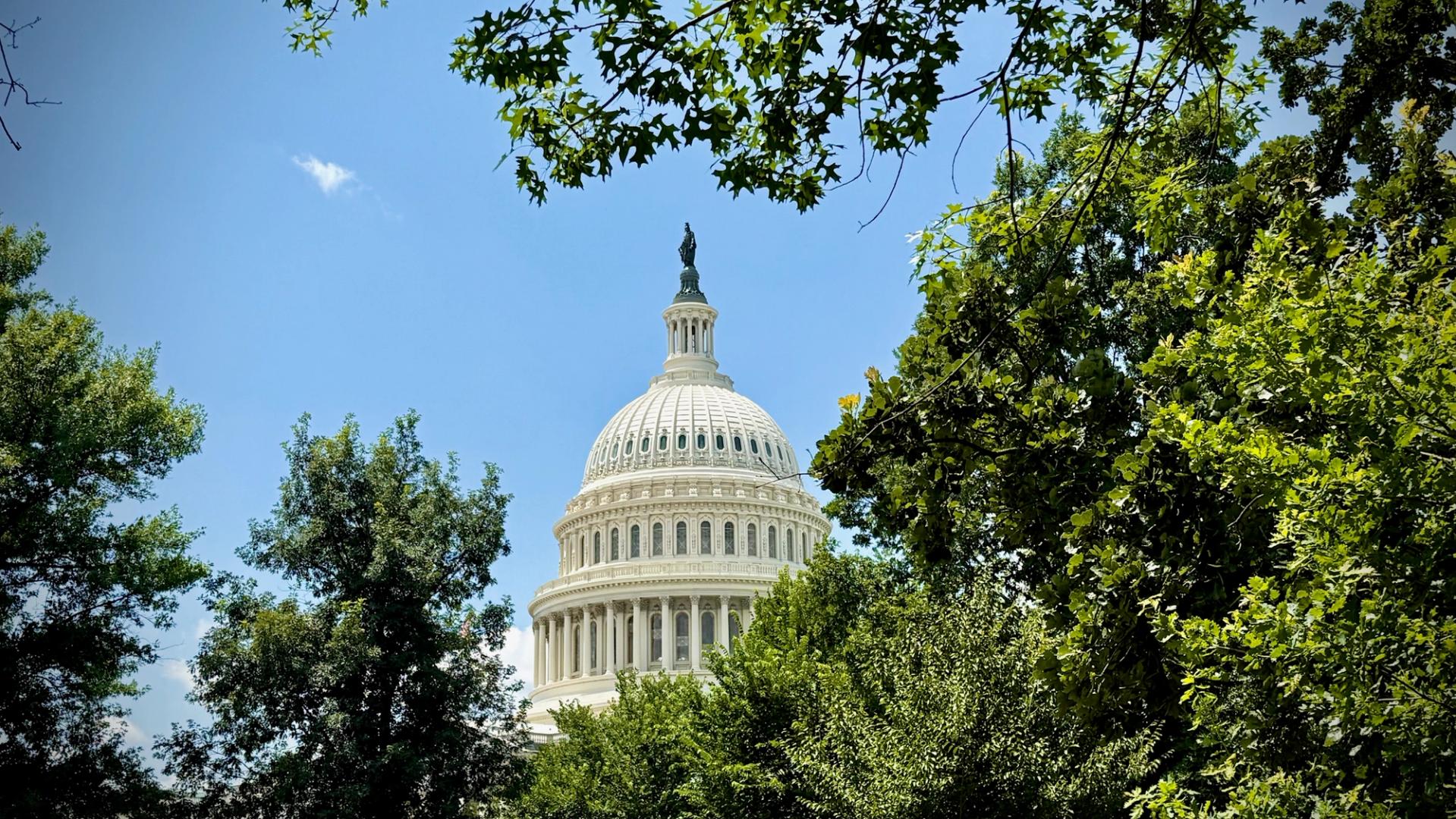
Image · CoinOtag
The gist
5-point summary · 1 min

Crypto News Singapore's central bank stripped Bsquared Technology of its crypto payment licence on Wednesday, ending the firm's authorisation to provide digital payment token services in the city-state after just 16 months of operation. The

  • Crypto News Singapore's central bank stripped Bsquared Technology of its crypto payment licence on Wednesday, ending the firm's authorisation to provide digital payment token services in the city-state after just 16 months of operation.
  • SoftBank's representatives exited the company's board upon closing, in line with the shareholder agreement that originally brought the Japanese investment giant in alongside Tether and Cantor Fitzgerald.
  • Twenty One's stock, listed under the XXI ticker, jumped 5.6% in Wednesday's pre-market session to $8.05 following the announcement.
  • The Monetary Authority has issued only 37 digital payment token services permits since the regime launched under the Payment Services Act 2019, and outright withdrawals remain rare.
  • Only Michael Saylor's Strategy sits ahead, with 843,738 BTC valued at approximately $65.3 billion.
$8.05$33.7 billion$65.3 billion5.6%
In this article

Crypto News Singapore's central bank stripped Bsquared Technology of its crypto payment licence on Wednesday, ending the firm's authorisation to provide digital payment token services in the city-state after just 16 months of operation. The Monetary Authority of Singapore acted following an on-site inspection that exposed weaknesses in risk management practices, breaches of conflict-of-interest rules and failures to comply with outsourcing guidelines. Regulators said Bsquared, also known as BSQ, submitted false or misleading information on multiple occasions, beginning with its initial licensing application and extending into the on-site review itself. The agency confirmed it is now examining the responsibilities of the company's key officers. In an unrelated development, Tether International confirmed it has purchased SoftBank Group's entire stake in Twenty One Capital, the publicly traded Bitcoin treasury vehicle led by Strike founder Jack Mallers. SoftBank's representatives exited the company's board upon closing, in line with the shareholder agreement that originally brought the Japanese investment giant in alongside Tether and Cantor Fitzgerald. Twenty One's stock, listed under the XXI ticker, jumped 5.6% in Wednesday's pre-market session to $8.05 following the announcement. Chief executive Paolo Ardoino described the transaction as an expression of conviction in XXI's long-term Bitcoin accumulation strategy and its standing as a flagship public-equity Bitcoin vehicle. The Bsquared revocation is unusual within Singapore's licensing framework. The Monetary Authority has issued only 37 digital payment token services permits since the regime launched under the Payment Services Act 2019, and outright withdrawals remain rare. Last year, the regulator rejected the application of AmazingTech, the operator of Tokenize Xchange, prompting a subsequent investigation by the Commercial Affairs Department. Bsquared has been ordered to submit a closure certificate from external auditors confirming that all customer funds have been returned, although the firm informed authorities that it held no outstanding client assets at the time of the revocation. The enforcement action lands against a backdrop of Singapore's continued push to position itself as Asia's leading blockchain and digital asset hub. The city-state hosts regional headquarters for major exchanges including Coinbase and Ripple, alongside the global head office of Crypto.com. Local lenders are increasingly extending into tokenised finance, with Singapore Gulf Bank rolling out new digital asset services and OCBC recently launching a tokenised gold fund deployed across Ethereum and Solana. Regulators have framed strict licensing oversight as compatible with that ambition, signalling that breaches of compliance obligations will trigger swift action regardless of an applicant's prior market positioning. Twenty One Capital has rapidly emerged as one of the most closely watched corporate Bitcoin treasuries on public markets. The firm currently holds 43,514 BTC, worth roughly $33.7 billion at recent prices, making it the second-largest publicly traded holder of the asset and a meaningful slice of Bitcoin's tradable circulating supply. Only Michael Saylor's Strategy sits ahead, with 843,738 BTC valued at approximately $65.3 billion. The XXI vehicle was structured from inception to anchor a public-equity wrapper around a pure Bitcoin balance sheet, distinguishing it from operating companies that have layered Bitcoin accumulation onto an existing business model. Tether's deeper commitment to Twenty One follows the stablecoin issuer's proposal last month to combine the listed company with Strike's Bitcoin financial services platform and the miner Elektron Energy in a multi-step merger. Ardoino said SoftBank had brought "credibility, perspective and discipline" during the early formation period and praised the Japanese group's track record of backing transformational technology companies. The Tether chief described XXI as one of the most significant opportunities to construct a public company entirely around Bitcoin from the ground up, with the consolidation roadmap arriving as the current bull market intensifies competition for institutional flows. Wednesday's developments highlight the two forces dominating crypto this cycle: tightening regulatory oversight in established jurisdictions and accelerating institutional concentration on Bitcoin balance sheets. Singapore's willingness to revoke a licence over governance failures signals that hub status will not shield non-compliant operators, while Tether's expanded ownership of a leading public Bitcoin treasury reflects the steady migration of corporate capital into hard digital assets rather than the broader altcoin complex. The combined picture suggests that 2026's market structure is being shaped less by retail speculation and more by regulators, large allocators and treasury-focused public vehicles.

Integrity note  ·  Xela does not rewrite or paraphrase article content. The excerpt above is the source publication's own words, sanitized for display. For the full piece — including any quotes, charts, or images — read it at CoinOtag. Xela's rewritten version is off for this story, so there's no editorial angle attached — you're getting the source's reporting unfiltered. When the rewrite is on, we add a What this means block underneath with the operator/trader takeaway.

What people are saying

Discussion

Hot takes

0/280

Loading takes…

Comments

Discussion · 0

Sign in to comment, like, and save articles.

Sign in

Loading comments…

Keep readingCrypto & Web3 desk
See all in Crypto
Bitcoin analysis shows what bulls need to do next to end this bearish 2026
·

Bitcoin analysis shows what bulls need to do next to end this bearish 2026

Bitcoin stabilizes near $63,000, but reclaiming $64,000 is the real test Bitcoin is stabilizing near $63,100 after buyers defended the lower part of its recent range. That is constructive, but it is not yet a confirmed recovery. BTC must first overcome resistance near $63,175-$63,270, while reclaiming and holding $64,000-$64,095 remains the more important test. Key takeaways for Bitcoin traders and investors Current position: BTC is holding above the previous month’s lower value boundary near $62,380. Immediate resistance: Buyers need to clear $63,130-$63,175, followed by $63,247-$63,270. Main recovery test: A sustained reclaim of $64,000-$64,095 would carry much more weight than a temporary bounce near $63,000. Major support: The broader $62,380-$62,535 region remains the most important defended zone. Bullish confirmation: Repeated closes, consolidation or a successful retest above $64,095 would show that Bitcoin is beginning to establish higher accepted value. Data note: The latest daily, four-hour and one-hour candles were incomplete when this analysis was prepared. Exchange-specific Bitcoin prices may also differ slightly. I'm also closely monitoring the digital asset space after , putting immediate pressure on lower order-flow shelves as bulls fight to defend structural trendlines. Regulatory headwinds also resurfaced as the , injecting fresh institutional hesitation into active trading books. Meanwhile, broader risk sentiment showed divergence across asset classes as , underscoring rotational breadth away from mega-cap tech into small-cap momentum. Macro headwinds and geopolitical posturing remain front and center following headline chatter that , all while monetary policy uncertainty lingers after amidst baseline model variances. Why Bitcoin’s stabilization is constructive but incomplete Bitcoin recently fell to approximately $62,535, where the decline attracted meaningful buying. Price subsequently recovered toward $63,100, strengthening the case that buyers are willing to defend the lower part of the previous month’s trading range. What stands out to me, however, is how little upward progress followed that buying. Several periods showed positive buying pressure, but BTC remained concentrated around $63,050 and repeatedly struggled to extend beyond $63,150-$63,175. In simple terms, buyers have shown that they can slow the decline, but they have not yet shown that they can move Bitcoin into a clearly higher trading range. This is the difference between stabilization and recovery: Stabilization means sellers are no longer pushing price lower with the same ease. Recovery means buyers are lifting price, holding above resistance and shifting the market’s most active trading area higher. Bitcoin has shown the first condition. The second still needs confirmation. Why $62,380 and $64,095 matter The previous month’s value area provides a useful map of where most Bitcoin trading took place: Value Area Low near $62,380: The lower boundary of the previous month’s heavily traded range. Point of Control near $64,095: The price that attracted the most trading activity during the month. Value Area High near $65,050: The upper boundary of the previous month’s accepted range. BTC is currently about $720 above the monthly Value Area Low, but almost $1,000 below the monthly Point of Control. Holding above $62,380 tells us that demand inside the previous month’s range has not completely failed. Remaining below $64,095 tells us that buyers have not regained control of the broader value structure. This is also why $64,095 may be more important than $64,000 itself. The round number attracts attention, but $64,095 represents the previous month’s busiest price area. A brief move above $64,000 could still become another failed breakout. Holding above $64,095 would provide stronger evidence that the market is accepting higher prices again. As discussed in our previous analysis, Bitcoin’s created technical repair work for buyers. That repair is not complete simply because BTC has bounced from $62,535. Bitcoin support and resistance levels to watch What would strengthen the bullish Bitcoin scenario? Swing traders should have 3 key price levels: The Value Area Low (VAL), Point of Control (POC) and Value Area High (VAH) of the previous month. Together, these levels map the previous month’s main area of accepted trading: the VAL marks its lower boundary, the VAH its upper boundary, and the POC the price where the most volume traded. Traders watch them because holding inside the area suggests continued acceptance, while a sustained break outside it may signal that the market is searching for a new value zone. The first constructive step would be sustained trade above $63,175. Buyers would then need to clear and hold above $63,247-$63,270. That would improve the probability of a move toward $63,350 and, eventually, the much larger $64,000-$64,095 test. A more convincing recovery would include: Bitcoin reclaiming $64,000. Price moving above the monthly point of control near $64,095. A pullback successfully defending the reclaimed area. Trading activity beginning to concentrate above $64,095 rather than immediately slipping back below it. If that sequence develops, approximately $65,050 becomes the next major value-area objective. What this means: Acceptance is more than touching a level. It means price spends time above it, survives pullbacks and begins treating the higher area as support. What would weaken the stabilization attempt? Failure to hold $62,920-$62,800 would weaken the current short-term base and increase the probability of another test of $62,535. The more serious bearish development would be sustained trade below $62,380. That would place BTC outside the previous month’s accepted value area and suggest that the market may need to search for demand at lower prices. Traders should still distinguish between a brief move below $62,380 and genuine acceptance beneath it. Crypto markets can produce fast stop-runs through visible support before reversing. Repeated closes or continued trading below the level would carry more bearish significance than a momentary sweep. What Bitcoin traders may consider watching Different traders may use these levels in different ways, at their own discretion: Short-term breakout confirmation: Watch whether BTC can break above $63,175 and successfully retest it, with $63,247-$63,270 providing the next validation area. Support-zone reaction: If BTC returns to $62,380-$62,535, watch whether buyers defend it again or whether selling begins to hold below the zone. Broader recovery confirmation: Treat $64,000-$64,095 as the decisive recovery test instead of assuming that every bounce from $63,000 marks a durable bottom. Because Bitcoin trades continuously, weekend conditions can sometimes involve thinner liquidity and less reliable breakouts. Confirmation through time, repeated closes or a successful retest may therefore be more useful than reacting to the first price spike. What should Bitcoin traders watch next? Bitcoin has defended the lower part of the previous month’s value area, but the rebound still needs to prove itself. The immediate challenge is to move beyond $63,175 and $63,270. The much larger test remains $64,000-$64,095. A successful reclaim would indicate that Bitcoin is returning toward the center of the previous month’s accepted value rather than merely bouncing from support. Until that happens, Bitcoin may be stabilizing, but it is not yet showing a fully confirmed bullish recovery. This analysis presents conditional market scenarios and opinions (not promises) at investingLive.com, not a guarantee of future performance. Traders should consider volatility, position size and their own risk limits before acting. This article was written by Itai Levitan at investinglive.com.

ForexliveSingle source
Newsletter

Track crypto & web3 every morning.

Daily digest tuned to this beat. The 5 stories most worth your time. Unsubscribe anytime.