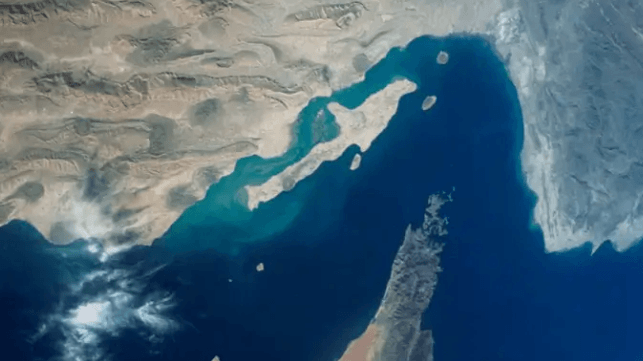
On Thursday, U.S. Central Command confirmed that it has officially lifted the American blockade on Iranian seaports, and is allowing all Iranian trade to pass freely in accordance with the new U.S.-Iran memorandum of understanding. Simultaneously, Iranian negotiators have reportedly suspended plans to attend the next round of talks in Switzerland because of ongoing Israeli strikes in Lebanon, throwing the new MOU into doubt just as it enters into force. Iranian outlet Fars reports that Tehran has decided to put the core element of the MOU - a 60-day negotiating period on a broad portfolio of subjects, including the Iranian nuclear program - on hold. Without acknowledging this claim, the White House confirmed late Thursday that Vice President JD Vance has postponed a much-anticipated trip to Switzerland to meet with Iranian negotiators. The high-stakes meeting had been expected to start Friday; no new timeline has been provided. Its rationale is an alleged breach of the deal's first paragraph: Iran secured a pledge from the U.S. that the ceasefire would include a halt to all hostilities, including Israeli hostilities in Lebanon against Iranian proxy group Hezbollah, a designated foreign terrorist organization. Israel continues to strike targets in southern Lebanon, including new attacks Thursday in Kfar Tebnit and Zabadin, which resulted in three deaths. Iran considers these Israeli strikes a violation of the entire MOU - but Israel is not a party to the agreement, and its government has so far refused to be bound by the deal. In the MOU's text, peace in Lebanon is part of the American end of the bargain; delivering it will require the U.S. to convince Israel to alter its military strategy. Israel maintains that at minimum, it needs to occupy a strip of Lebanon along the border in order to protect Israeli settlements from attack. Some within the Israeli government support a much more active military intervention. "Duty demands that we strike Lebanon everywhere, around the clock, with maximum force and with no proportionality," Moshe Saada, an MP from Israel's ruling Likud party, told Reuters this week. Lead Iranian negotiator Mohammad-Bagher Ghalibaf took a similarly martial tone in a statement late Thursday. Referring to the brand new U.S.-Iran MOU and the prospect of peace talks, he reverted to wartime rhetoric, warning that Tehran could resort to force if the terms of the deal are not met. Stay on Top of the Daily Maritime News The maritime news that matters most Get the latest maritime news delivered to your inbox daily. "In the event of bad faith, breach of contract, and excessive demands by the opposing side, we have no hesitation in delivering a crushing response to the enemy. They were once slapped during the war; if they wish to tread that path again, they will receive an even harder slap," Ghabilaf said, without confirming any formal pause in the talks. If Iran's pause on the talks is confirmed, the timing could not be worse for shipping: the first signs of large-scale movement in the Strait of Hormuz just began on Thursday with a small exodus of vessels that had been trapped inside the Arabian Gulf. If Iran suspends its side of the MOU, the future of Hormuz maritime security could be substantially less certain.
SaaS & Software·Jun 19, 2026
Iran Delays U.S. Peace Talks over Israeli Attacks in Lebanon
Article URL: Comments URL: Points: 4 # Comments: 0
Hacker News3 min readSingle source
The gist
5-point summary · 1 minArticle URL: Comments URL: Points: 4 # Comments: 0
- Without acknowledging this claim, the White House confirmed late Thursday that Vice President JD Vance has postponed a much-anticipated trip to Switzerland to meet with Iranian negotiators.
- Israel continues to strike targets in southern Lebanon, including new attacks Thursday in Kfar Tebnit and Zabadin, which resulted in three deaths.
- "Duty demands that we strike Lebanon everywhere, around the clock, with maximum force and with no proportionality," Moshe Saada, an MP from Israel's ruling Likud party, told Reuters this week.
- Lead Iranian negotiator Mohammad-Bagher Ghalibaf took a similarly martial tone in a statement late Thursday.
- Stay on Top of the Daily Maritime News The maritime news that matters most Get the latest maritime news delivered to your inbox daily.
Integrity note · Xela does not rewrite or paraphrase article content. The excerpt above is the source publication's own words, sanitized for display. For the full piece — including any quotes, charts, or images — read it at Hacker News. Xela's rewritten version is off for this story, so there's no editorial angle attached — you're getting the source's reporting unfiltered. When the rewrite is on, we add a What this means block underneath with the operator/trader takeaway.
What people are saying
Discussion
Hot takes
0/280
Loading takes…
Comments
Discussion · 0
Sign in to comment, like, and save articles.
Sign inLoading comments…